
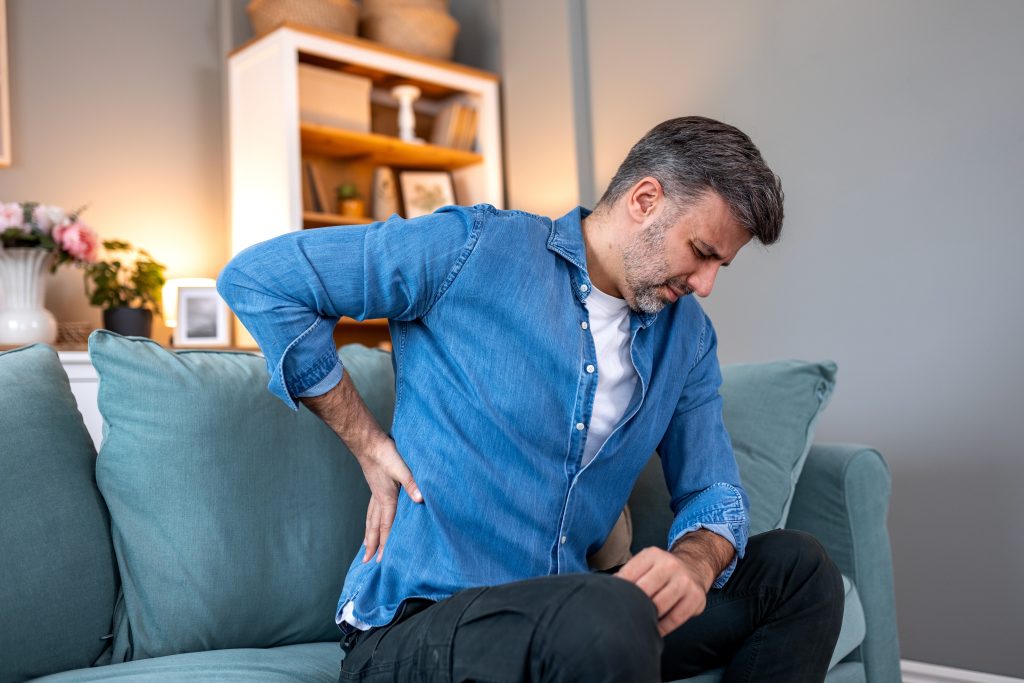
Non-surgical treatments for sciatica, such as physical therapy, chiropractic adjustments, interventional pain management, and regenerative medicine, can effectively reduce nerve irritation, restore mobility, and help you return to daily life – often without the need for surgery.
At Boca Trauma and Rehab, our doctors use an integrative, multi-treatment approach to target the root cause of sciatic nerve pain without invasive procedures.
Sciatica isn’t a condition itself, but rather a symptom of an underlying issue that is compressing or irritating the sciatic nerve – the longest nerve in your body. It runs from the lower back through the hips and buttocks and down each leg. When this nerve becomes compressed or irritated – often by a herniated disc, bone spur, or narrowing of the spinal canal – the result is a distinct pattern of symptoms that can range from mildly annoying to severely debilitating.
Common symptoms of sciatica include:
Sharp, shooting, or burning pain that travels from the lower back down through one leg
Numbness or tingling (“pins-and-needles” sensation) in the leg or foot
Muscle weakness in the affected leg or foot
A burning sensation along the nerve pathway
Pain that worsens when sitting, standing for long periods, or with sudden movements like coughing or sneezing
For many people, these symptoms make everyday activities like walking, driving, or even sleeping difficult. Understanding what’s causing your sciatica is the first step toward choosing the right treatment. The good news is that most cases can be resolved with conservative, non-surgical care.
For the vast majority of individuals suffering from sciatic nerve pain, surgery is not the first or necessary step. A non-surgical approach prioritizes healing the body naturally, reducing inflammation, and correcting the mechanical issues that led to nerve compression in the first place.
Shorter recovery periods – Most patients can continue working and living normally during treatment.
Addresses root causes – Treatments like physical therapy and chiropractic care don’t just mask pain; they correct the alignment, strength, and flexibility issues that contribute to nerve compression.
Combination potential – Multiple non-surgical treatments can be layered together into a personalized plan, which is exactly how Boca Trauma and Rehab approaches sciatica care.
Most people with sciatica are excellent candidates for non-surgical treatment, especially those who:
Are experiencing sciatica symptoms for the first time
Have mild to moderate nerve compression visible on imaging
Haven’t responded to rest or over-the-counter medications alone
Want to avoid surgery or dependence on pain medication
Are dealing with sciatica triggered by a car accident, sports injury, or work-related strain
Are looking for a long-term solution to prevent recurrence
Our team evaluates each patient individually to determine which combination of therapies will produce the most meaningful results.
A successful treatment plan is rarely one-size-fits-all. It often involves a combination of therapies tailored to your specific diagnosis and symptoms.
Physical therapy is one of the most effective long-term strategies for sciatica relief. A personalized program typically includes:
Stretching exercises that target the piriformis muscle, hamstrings, and lower back to relieve pressure on the sciatic nerve
Core strengthening to stabilize the lumbar spine and prevent future flare-ups
Posture correction and body mechanics training to reduce strain during everyday activities
Manual therapy techniques to improve mobility in the lower back and hips
At Boca Trauma and Rehab, our integrated approach supports faster recovery, especially for athletes or individuals returning to physically demanding work.
Chiropractic adjustments focus on restoring proper spinal alignment, which can directly relieve pressure on the sciatic nerve. When vertebrae in the lumbar spine shift out of position – whether from injury, poor posture, or degenerative changes – they can pinch or irritate the nerve roots that form the sciatic nerve.
Our chiropractic care sessions are tailored to each patient’s specific condition. Treatment may also include Manipulation Under Anesthesia (MUA) for patients with chronic conditions who haven’t responded to standard adjustments. This specialized technique allows for greater correction of range of motion while the patient is in a relaxed state.
While the goal is to provide relief without long-term medication use, medications can be a useful tool for managing acute pain and inflammation.
Over-the-Counter NSAIDs: Non-steroidal anti-inflammatory drugs like ibuprofen or naproxen can reduce inflammation around the sciatic nerve and provide temporary pain relief. They’re often useful as a first-line approach while other treatments take effect.
Prescription Medications: For more intense pain, we may incorporate prescription-level options as part of a broader medication management plan. This could include muscle relaxants, oral steroids, or neuropathic pain agents. Every medication decision is made with the goal of supporting recovery – not creating dependence.
Simple yet effective, alternating between hot and cold packs can provide significant relief.
Cold Therapy: Applying ice packs to the lower back during the first 48 to 72 hours of a sciatica flare-up helps reduce swelling and numb the area around the irritated nerve. Apply for 15 to 20 minutes at a time with a cloth barrier to protect the skin.
Heat Therapy: After the initial inflammation subsides, switching to heat – a heating pad or warm compress – increases blood flow to the area, relaxes tight muscles, and promotes healing. Many patients find that alternating between cold and heat throughout the day provides the most relief.
While it may seem counterintuitive, staying active is one of the most important things you can do when dealing with sciatica. Prolonged bed rest can worsen symptoms by allowing muscles to weaken and stiffen.
Low-impact activities that benefit sciatica patients include:
Walking at a comfortable pace for 20 to 30 minutes daily
Swimming or water aerobics, which reduce spinal load while building strength
Gentle yoga or stretching routines that emphasize hip and hamstring flexibility
Stationary cycling to maintain cardiovascular fitness without jarring the spine
Your provider can advise you on which activities are safe for your specific condition and how to gradually increase your activity level.
When conservative measures alone aren’t enough, interventional pain management provides targeted relief at the source of the problem.
Epidural Steroid Injections: These injections deliver a powerful anti-inflammatory medication (a corticosteroid) directly into the epidural space surrounding the irritated nerve roots in the spine. By reducing inflammation at the precise location of nerve compression, epidural steroid injections can provide weeks to months of significant pain relief – often creating a window of opportunity for you to progress with physical therapy and exercise.
Nerve Root Blocks: A nerve root block involves injecting a local anesthetic, sometimes combined with a corticosteroid, near the specific nerve root causing pain. This approach serves two purposes: it confirms which nerve root is the source of symptoms, and it provides targeted pain relief.
Regenerative medicine harnesses your body’s own healing power to repair damaged tissues that may be contributing to your sciatic pain.
PRP Injections: Platelet-rich plasma (PRP) injections use a concentrated preparation of your own blood platelets, which are rich in growth factors that accelerate tissue repair. When injected into damaged tissue around the spine, PRP can promote healing in irritated discs, ligaments, or tendons that may be compressing the sciatic nerve.
Every sciatica case is different, so timelines vary. Your journey begins with a thorough evaluation to accurately diagnose the cause of your sciatica. The ultimate goal is not just to resolve your current pain but to empower you with the tools and knowledge to prevent it from returning. Boca Trauma and Rehab schedules follow-up evaluations to monitor progress and adjust your care plan as needed.
Non-surgical treatments for sciatica offer a practical, effective path to relief for most patients with sciatic nerve pain. From physical therapy and chiropractic care to interventional injections and regenerative medicine, these approaches work together to reduce inflammation, relieve nerve pressure, and restore function – all without the downtime of surgery.
At Boca Trauma and Rehab, our team develops individualized treatment plans that integrate multiple therapies tailored to each patient’s specific condition and goals. If sciatica is limiting your daily life, exploring these non-invasive options is a crucial first step toward reclaiming your active lifestyle.

About the Author
