
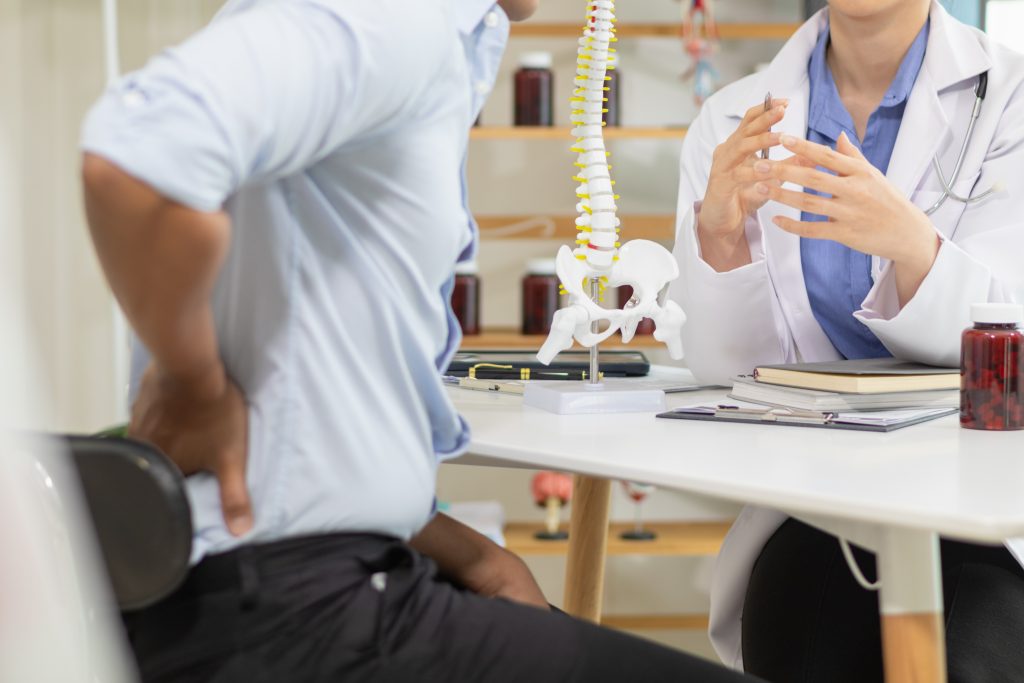
A candidate for manipulation under anesthesia (MUA) is typically someone suffering from chronic musculoskeletal pain who has not achieved lasting relief from conservative treatments like in-office chiropractic care or physical therapy. If you are struggling with persistent stiffness, limited mobility, and discomfort that affects your quality of life, MUA may be a viable, non-invasive solution to help you find relief.
At our center in Boca Raton, our specialists perform MUA as an outpatient procedure for those seeking alternatives to surgery.
Manipulation under anesthesia is a non-invasive procedure designed to treat acute and chronic pain conditions affecting the joints and spine. The patient is placed under sedation, which allows the muscles and joints to relax completely. This state of relaxation enables a specialist to perform targeted stretches, massages, and adjustments without the patient’s body resisting due to pain or muscle guarding.
Our team uses this opportunity to comfortably break up fibrous adhesions and scar tissue that often form after injury or chronic inflammation. By restoring motion to restricted joints and soft tissues, MUA can dramatically reduce pain and improve function.
MUA is a versatile procedure effective for a range of musculoskeletal issues. It is particularly beneficial for conditions where fibrous adhesions (internal scar tissue) and chronic muscle tightness are the primary sources of pain and restricted movement.
For individuals with persistent neck and back pain, MUA can be transformative. Conditions like chronic disc issues, facet syndrome, and generalized spinal stiffness often involve deep-seated scar tissue that is difficult to address with conventional therapies.
Under sedation, we can gently manipulate the spine to break up these adhesions, decompress irritated nerves, and restore more natural alignment and mobility. The procedure targets multiple pain generators simultaneously, including facet joints, disc-related problems, and myofascial restrictions.
Frozen shoulder (adhesive capsulitis) is a classic example of a condition that responds well to MUA. This painful condition involves the thickening and tightening of the connective tissue capsule surrounding the shoulder joint, severely limiting the range of motion.
MUA allows for the controlled stretching of the shoulder capsule far beyond what a patient could tolerate while awake, breaking the cycle of pain and stiffness. Shoulder pain sufferers who can’t lift their arms or reach behind their backs often experience dramatic improvements after MUA.
Sciatica is characterized by pain that radiates along the path of the sciatic nerve. It is often caused by compression or irritation from a herniated disc, spinal stenosis, or a tight piriformis muscle.
By relaxing the deep muscles of the lower back and pelvis, MUA can help relieve the pressure on the nerve root. The procedure addresses both spinal and peripheral nerve entrapments that contribute to numbness, tingling, and shooting pain down the legs.
Chronic pain and stiffness in major joints, such as the hips, knees, and sacroiliac joints, can also be addressed with MUA. Repetitive strain, old injuries, or conditions like bursitis can lead to the formation of adhesions that restrict movement and cause pain.
The procedure helps restore proper biomechanics by improving the glide and motion of these joints. Patients with limited hip flexion, knee stiffness after injury, or sacroiliac dysfunction find that sedated manipulation breaks through movement barriers that standard therapy cannot overcome.
How do you know if your specific situation warrants consideration for MUA? While a formal evaluation is always necessary, certain signs and symptoms are common among individuals who ultimately benefit from the procedure.
Consider this procedure if you experience:
Pain that has lasted for more than 6-8 weeks despite regular treatment
A feeling of being “stuck” or having a “locked” joint
A noticeable decrease in your normal range of motion
Pain that worsens with movement but also feels stiff after periods of rest
Numbness, tingling, or radiating pain in your arms or legs
Muscle spasms that prevent normal movement patterns
Joint stiffness limiting daily activities like dressing or driving
Failed response to physical therapy, chiropractic adjustments, or injections
If these issues sound familiar, you may be dealing with the kind of fibrous adhesions and chronic muscle tension that MUA is specifically designed to address. Patients often describe feeling “stuck” or report that their pain temporarily improves with treatment but quickly returns.
The ideal candidate for MUA is motivated to find a solution and ready to move past the limitations of their chronic pain.
This is the largest group of candidates. These are individuals who have diligently followed treatment plans involving physical therapy, standard chiropractic care, medication management, or other modalities but have hit a plateau.
Their pain may have improved slightly, but it remains a persistent problem that prevents them from returning to normal activities. MUA serves as a powerful intervention to push past this plateau and achieve a new level of healing, reaching underlying problems that adhesions and protective muscle guarding prevent standard treatments from addressing.
If your ability to turn your head, lift your arm, bend over, or walk without stiffness is severely compromised, you may be a good candidate. Movement limitations significantly impact quality of life – candidates often cannot turn their heads fully, bend forward to tie their shoes, or raise their arms overhead.
The goal of manipulation under anesthesia is to restore motion. By breaking up the internal scar tissue that physically blocks movement, the procedure can give you back the freedom to move comfortably and confidently.
MUA offers a middle ground between conservative care that is no longer working and invasive procedures you may not be ready for.
While MUA is a safe and effective procedure for many, it is not suitable for everyone. A comprehensive evaluation is critical to ensure patient safety and successful outcomes.
Certain medical conditions can make sedation or manipulation risky. These may include:
Severe or uncontrolled osteoporosis or bone fragility
Acute fractures or recent fractures in the treatment area
Active infections or fever
Certain types of cancer or metastatic cancer affecting the bones
Advanced spinal instability
Uncontrolled high blood pressure or severe heart/lung conditions
Uncontrolled cardiac conditions
Pregnancy
Severe respiratory conditions
Blood clotting disorders
Age alone doesn’t disqualify candidates, but elderly patients require careful evaluation of bone density and overall health status.
Before being approved for MUA, every patient at Boca Trauma and Rehab undergoes a thorough diagnostic workup. Our team conducts comprehensive evaluations that include:
Detailed medical history and review of previous treatment records
Physical examination focusing on movement restrictions
Review of diagnostic imaging, such as X-rays, MRIs, or CT scans
Medical clearance ensuring safety for sedation
Discussion of realistic expectations and outcomes
The evaluation determines whether MUA addresses the specific pain generators causing your symptoms. Some patients may need additional treatments, such as regenerative medicine or interventional pain management, alongside MUA for optimal results.
Ideal candidates for MUA are typically those with chronic musculoskeletal pain, particularly in the neck, back, shoulders, hips, and other joints, who have not found success with other conservative therapies.
By allowing a specialist to work on deeply relaxed muscles and joints, MUA can break up stubborn adhesions, restore mobility, and provide lasting relief where other methods have failed. Through careful evaluation and patient selection, MUA offers a powerful treatment option for breaking through pain patterns and restoring function.

About the Author
